
What Is Product Information Management (PIM)? A Complete Guide for Modern Businesses
Managing product information becomes increasingly difficult as a business grows.
Product data may be stored across spreadsheets, ERP systems, supplier files, e-commerce platforms, marketplaces, and internal databases. As the number of products and sales channels increases, keeping this information accurate, complete, and consistent becomes a major challenge.
This is where Product Information Management (PIM) helps.
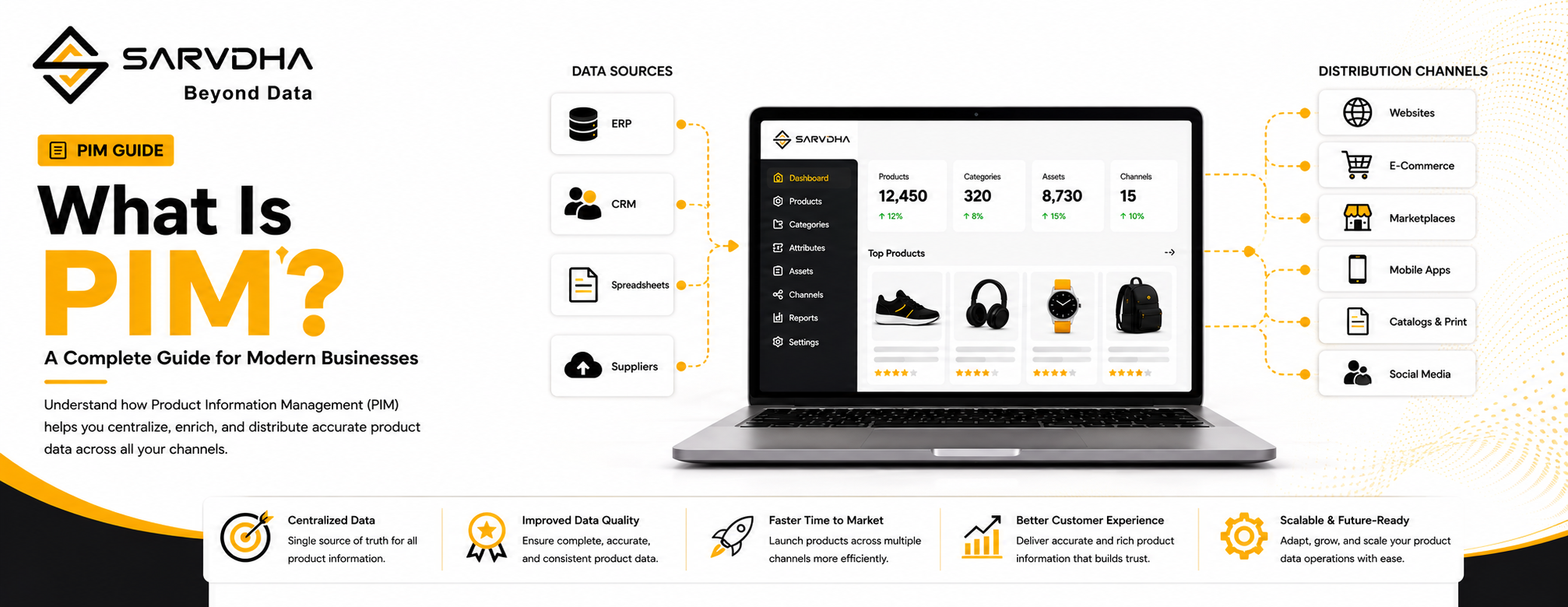
A PIM system provides a centralized platform for collecting, managing, enriching, organizing, and distributing product information across multiple channels.
In this guide, we will explain what PIM is, how it works, why businesses need it, and how it can improve product data management.
What Is Product Information Management (PIM)?
Product Information Management (PIM) is a system used to centrally manage all the information related to a company's products.
This may include:
- Product names
- Product descriptions
- Technical specifications
- Dimensions and weights
- Prices
- Product categories
- Product attributes
- Product images
- Documents and manuals
- Videos
- Marketing content
- Translations
- Compliance information
Instead of managing this information in multiple disconnected systems, a PIM platform provides a centralized source for managing product data.
For example, a manufacturer may have thousands of products distributed across multiple countries and sales channels.
Without a PIM system, product information may be stored in:
- Excel files
- ERP systems
- Supplier documents
- E-commerce platforms
- Marketplaces
- Local databases
- Shared folders
This often results in duplicate, incomplete, or outdated product information.
A PIM system helps businesses organize this information in one centralized location.
Why Do Businesses Need a PIM System?
As businesses grow, product data becomes more complex.
A company may start with a few hundred products and a single sales channel. However, as it expands, the same product information may need to be published across:
- E-commerce websites
- Online marketplaces
- Retail stores
- Mobile applications
- Printed catalogs
- Distributor portals
- Regional websites
- B2B portals
Managing product information manually across all these channels is difficult and time-consuming.
For example, imagine that a company changes the technical specification of a product.
Without a centralized PIM system, the team may need to manually update the information in several different systems.
If even one channel is missed, customers may see incorrect information.
A PIM system helps businesses create a single source of truth for product information.
How Does a PIM System Work?
A PIM system generally follows a process like this:
1. Collect Product Data
Product information is collected from different sources, such as:
- ERP systems
- Supplier files
- CSV and Excel files
- APIs
- Databases
- Product catalogs
- Internal systems
2. Centralize the Information
The collected product information is stored in a centralized platform.
This allows teams to manage product information from one location instead of working with multiple disconnected files and systems.
3. Organize Product Data
Products can be organized using:
- Categories
- Product families
- Attributes
- Classification systems
- Relationships
- Variants
This creates a structured product data model.
4. Enrich Product Information
Raw product information may not be ready for customers.
Teams can enrich the data by adding:
- Marketing descriptions
- Product features
- Technical details
- Images
- Videos
- Documents
- Translations
5. Validate Product Data
A PIM system can help identify missing or incomplete information.
For example, a business may define a rule that every product must have:
- Product name
- Product description
- Main image
- Category
- Technical specifications
Products that do not meet these requirements can be identified before publication.
6. Distribute Product Information
Once the product information is complete, it can be distributed to different channels.
These may include:
- E-commerce websites
- Marketplaces
- Mobile applications
- Retail systems
- B2B portals
- Print catalogs
This allows businesses to maintain consistent product information across multiple channels.
What Type of Information Does a PIM System Manage?
A PIM system can manage many different types of product information.
Basic Product Information
This includes:
- Product name
- SKU
- Product code
- Brand
- Product category
Technical Information
This may include:
- Dimensions
- Weight
- Materials
- Technical specifications
- Compatibility information
Marketing Information
This includes:
- Product descriptions
- Marketing copy
- Product benefits
- Selling points
Digital Assets
Product-related assets may include:
- Images
- Videos
- PDFs
- User manuals
- Certificates
- Technical documents
In many cases, PIM platforms are integrated with Digital Asset Management (DAM) systems to manage these assets efficiently.
Localization Data
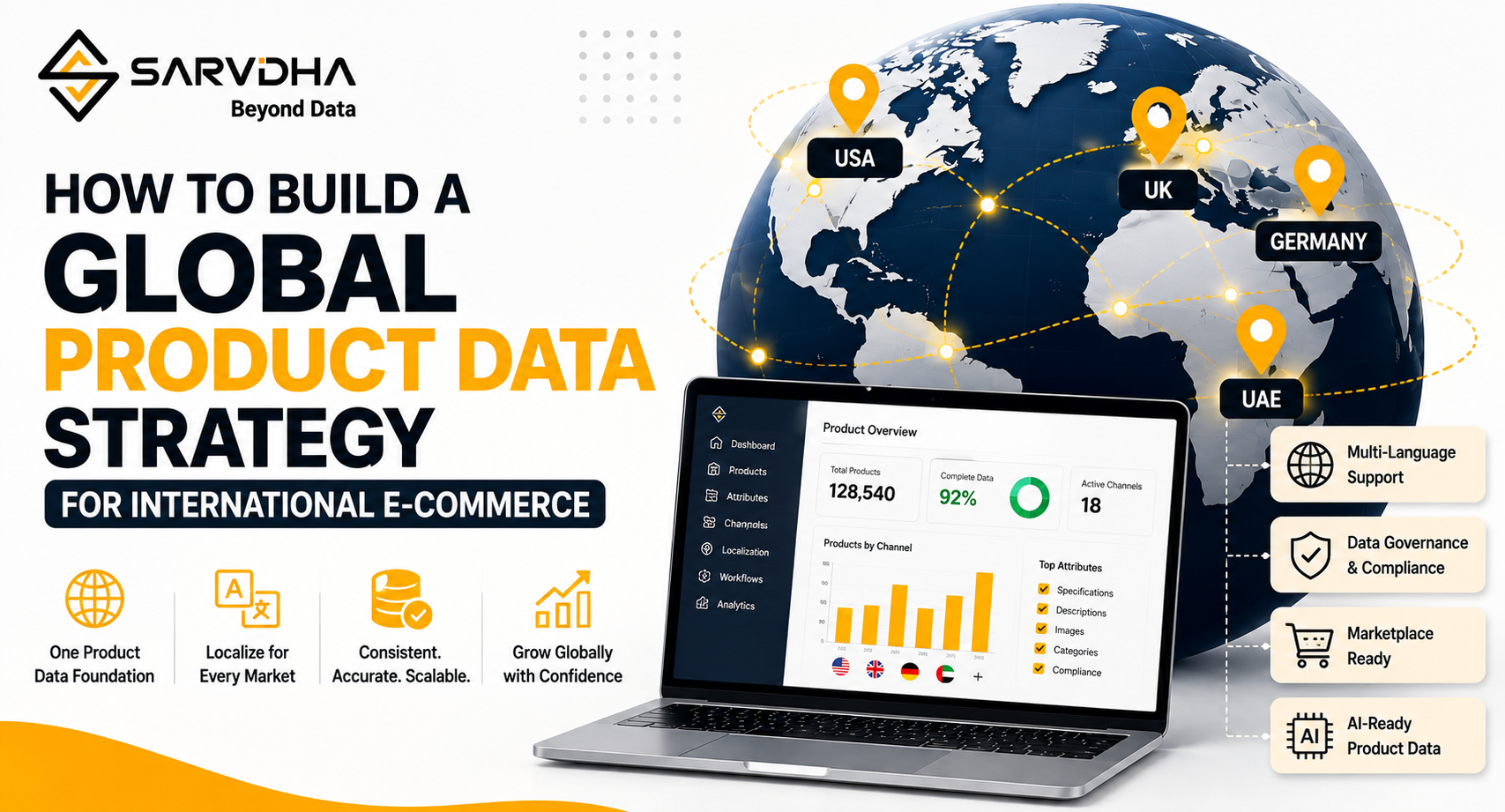
For international businesses, products may require:
- Multiple languages
- Regional descriptions
- Local measurements
- Country-specific information
A PIM system can help manage this localized product information.
Common Problems Businesses Face Without PIM
Many businesses experience similar product data challenges.
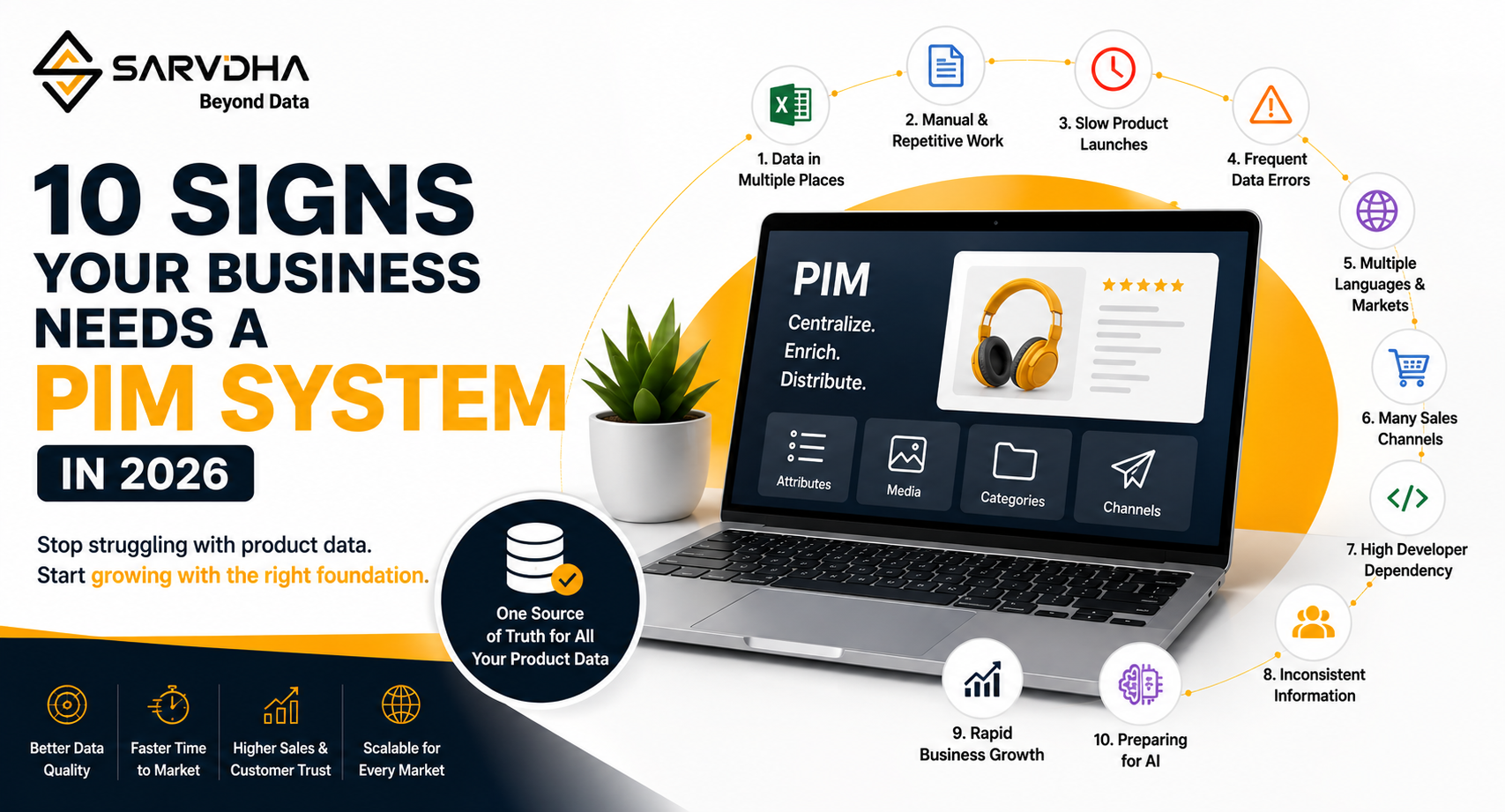
1. Product Data Is Stored in Multiple Locations
Information may be spread across different spreadsheets, systems, and departments.
This makes it difficult to determine which information is correct.
2. Duplicate Product Information
The same product may exist multiple times with slightly different information.
This can create confusion and data-quality problems.
3. Inconsistent Product Information
A product may have different descriptions or specifications across different sales channels.
This can damage customer trust.
4. Manual Data Management
Teams may spend hours copying and updating product information manually.
This increases the risk of human error.
5. Slow Product Launches
When product information needs to be prepared manually for every channel, launching new products takes longer.
6. Poor Data Quality
Missing attributes, incorrect specifications, and outdated information can lead to customer complaints and operational problems.
Key Benefits of Product Information Management
Centralized Product Data
A PIM system provides a central location for managing product information.
This makes it easier for teams to find and manage accurate product data.
Improved Data Quality
Businesses can define rules and workflows to improve product completeness and consistency.
Faster Product Launches
Once product information is prepared, it can be distributed to multiple channels more efficiently.
Better Customer Experience
Customers receive more accurate and complete product information.
This can help them make better purchasing decisions.
Reduced Manual Work
Automated workflows and integrations can reduce repetitive data entry and manual updates.
Improved Team Collaboration
Different teams can work with the same product information while following defined workflows and responsibilities.
PIM vs ERP: What Is the Difference?
A common question is whether a business needs a PIM system if it already has an ERP.
The answer is that they generally serve different purposes.
ERP
An ERP system is primarily focused on managing business operations such as:
- Finance
- Inventory
- Procurement
- Orders
- Manufacturing
- Supply chain
PIM
A PIM system focuses primarily on managing and enriching product information for distribution across customer-facing channels.
For example:
In many businesses, the ERP acts as a source of basic product information, while the PIM enriches and distributes product data.
The two systems can work together through integrations.
PIM vs MDM: What Is the Difference?
PIM and Master Data Management (MDM) are related but different concepts.
PIM
PIM focuses specifically on product information.
MDM
MDM manages broader business master data, which may include:
- Products
- Customers
- Suppliers
- Locations
- Employees
A PIM system can therefore be considered a specialized solution focused on product information management.
Some enterprise platforms support both PIM and MDM capabilities.
Who Needs a PIM System?
A PIM system can be particularly useful for businesses with:
- Large product catalogs
- Multiple sales channels
- International operations
- Multiple languages
- Complex product relationships
- Many product attributes
- Multiple suppliers
- Frequent product updates
Industries that may benefit from PIM include:
- Manufacturing
- Retail
- E-commerce
- Consumer goods
- Automotive
- Healthcare
- Industrial equipment
- Electronics
- Wholesale and distribution
The need for PIM is usually driven by the complexity of product information rather than simply the number of products.
Even a business with a smaller product catalog may benefit from PIM if each product has complex technical information, multiple variations, or extensive digital assets.
What Should You Consider When Choosing a PIM Solution?
Every business has different data requirements.
Before selecting a PIM platform, businesses should consider:
Data Complexity
How many attributes, variants, relationships, and product categories need to be managed?
Integration Requirements
Does the PIM need to connect with:
- ERP systems?
- E-commerce platforms?
- Marketplaces?
- CRM systems?
- DAM systems?
- Internal applications?
Workflow Requirements
Does the business require workflows for:
- Data creation?
- Review?
- Approval?
- Translation?
- Publication?
Scalability
Can the system support future business growth?
User Roles and Permissions
Can different teams access and manage the appropriate product information?
Internationalization
Does the business require multiple languages, currencies, regions, or websites?
These factors should be considered before selecting and implementing a PIM platform.
Why Data Modeling Is Important in PIM
One of the most important parts of a PIM implementation is designing the product data model.
A poorly designed data model can create problems later.
A good data model should clearly define:
- Product types
- Attributes
- Categories
- Product relationships
- Variants
- Inheritance
- Localization
- Validation rules
For example, a clothing business may need to manage:
A well-designed data structure makes the system easier to manage and scale.
This is why PIM implementation should begin with understanding the business and its data—not simply installing software.
How Sarvdha Helps Businesses With PIM and Product Data
Every business has unique product data requirements.
At Sarvdha, we help businesses understand, structure, and manage complex product information through technology solutions designed around their business processes.
Our approach can include:
- Product data analysis
- Data modeling
- PIM architecture
- PIM implementation
- Data migration
- System integration
- Data enrichment workflows
- Product data governance
- Custom business requirements
The goal is not simply to introduce another software platform.
The goal is to create a reliable product data foundation that can support business growth and digital channels.
Conclusion
Product Information Management helps businesses centralize, organize, enrich, validate, and distribute product information.
As product catalogs grow and businesses expand across multiple channels, managing product data through spreadsheets and disconnected systems becomes increasingly difficult.
A PIM system can help businesses:
- Improve product data quality
- Reduce manual work
- Speed up product launches
- Maintain consistency across channels
- Improve collaboration
- Create a single source of truth for product information
The right PIM solution depends on the business's data structure, processes, integrations, and future goals.
If your business is struggling with complex product data, multiple systems, or inconsistent product information, a structured PIM strategy can be an important step toward improving your digital operations.
Need help managing complex product information? Contact Sarvdha to discuss your PIM and data management requirements.
Frequently Asked Questions
What does PIM stand for?
PIM stands for Product Information Management. It is a system used to centralize, manage, enrich, and distribute product information.
What is the main purpose of a PIM system?
The main purpose of a PIM system is to provide a centralized source for managing accurate and consistent product information across multiple sales and digital channels.
Is PIM the same as ERP?
No. ERP systems primarily manage business operations such as finance, inventory, and orders. PIM systems focus on managing and distributing product information.
Is PIM the same as MDM?
No. PIM focuses primarily on product information, while MDM can manage different types of master data, including products, customers, suppliers, and locations.
When does a business need a PIM system?
A business may need a PIM system when it has complex product information, multiple sales channels, large product catalogs, multiple languages, or difficulty maintaining consistent product data.
Can PIM integrate with ERP and e-commerce systems?
Yes. PIM systems can commonly integrate with ERP, e-commerce, marketplace, CRM, DAM, and other business systems.
How can Sarvdha help with PIM?
Sarvdha helps businesses with product data analysis, data modeling, PIM architecture, implementation, migration, integration, and complex data management solutions.